What to pack when traveling with children?
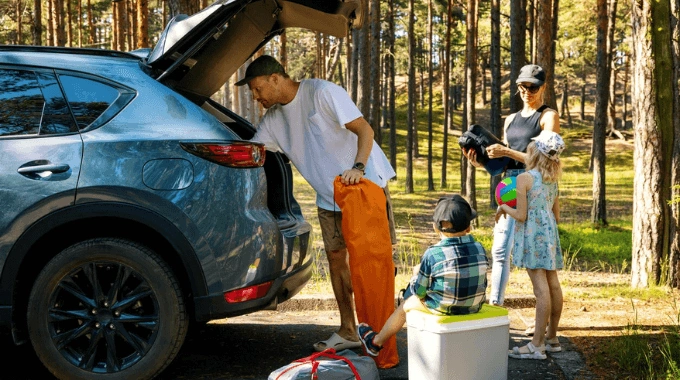
Travelling with children can come with quite a few challenges. If you’re travelling alone or with friends, getting ready for the trip is usually much simpler. But when travelling with children, you need to think ahead and plan for much more – not just what to wear or where to stay, but also how to take care of your child’s food, sleep, entertainment, safety and health. The more you plan in advance, the more likely you are to have a smooth and stress-free trip.
It is a good idea to make a checklist, check all the necessary documents, talk to your children about the trip and accept that things may not always go according to plan. The most important things are patience and preparation.
If this is your first time travelling with a child or children, you may have plenty of questions. In this article, you’ll find answers and practical tips on what to pack when travelling abroad with children, heading somewhere warm or even taking a short trip within Lithuania.
Documents and important formalities – how to prepare properly?
First of all, make sure you have all the essential documents. They are required even for babies when travelling abroad. Without them, your trip could be over before you even reach the airport gate.
Make sure you have:
-
a valid child’s passport or ID card (depending on the country you are travelling to);
-
a copy of the child’s birth certificate (some countries may require proof of your relationship);
-
parental consent if only one parent is travelling or the child is travelling with relatives;
-
travel insurance for the whole family, especially for children;
-
a European Health Insurance Card (if travelling within the EU);
-
hotel and flight reservations (printed or stored electronically);
-
contact information for where to seek help if your child becomes ill or an accident occurs.
Keep these documents in a separate, secure place that is easy to access, such as your handbag, backpack or document holder.
What should you know about travel insurance?
Travel insurance is not just an optional extra – it is an essential part of any responsible trip, especially when travelling with children. Even if you have planned everything down to the smallest detail, unexpected situations can happen to anyone: illness, a child getting injured, lost luggage, a cancelled flight or even an accident abroad. In such situations, travel insurance can help protect not only your health but also your finances.
The most important thing is to find out in advance what type of insurance cover you need for your particular trip. For example, if you are travelling within the European Union, having a European Health Insurance Card is useful, but it does not cover all expenses, particularly at private healthcare facilities or in cases where transportation is required. That is why additional travel insurance is essential.
When choosing insurance, pay attention to the following:
-
Medical expenses cover. Your insurance should cover medical treatment, medication, emergency care, hospitalisation and even transportation back to Lithuania if necessary.
-
Coverage limits. Check the maximum amount your insurance will cover. For children in particular, it is important to have access to prompt and high-quality medical care.
-
Additional cover. It can be useful to have cover for accidents, personal liability (if your child accidentally damages something), trip cancellation or delays. If you are planning activities such as skiing or other sports, you will also need extended cover, such as ski insurance.
-
Baggage insurance. This can come in handy if your luggage is lost or your belongings are damaged.
-
Geographical coverage. Check that your insurance is valid in the country you are travelling to. Some insurers limit their cover in certain countries or regions.
It is especially important to remember that travel insurance can be arranged for the whole family or separately for each family member, so make sure your child is also covered by child insurance. If you are travelling with a baby or young child, make sure their cover is just as comprehensive as the cover provided for adults.
It is worth purchasing travel insurance as early as possible – ideally as soon as you book your trip. This means it may cover not only incidents that happen during the journey, but also unexpected cancellations before departure – for example, if your child becomes ill and you can no longer travel.
What should you know about car insurance when travelling with children?
If you are travelling abroad with your children in your own car, make sure to check whether your third-party liability insurance is valid in the country you are visiting. It is valid in many European countries, although in some cases you may need an additional Green Card.
You may also want to consider KASKO insurance – it can cover damage to your own car caused by an accident, vandalism or natural events. When travelling with children, roadside assistance can also be particularly useful if your car breaks down unexpectedly, you need technical assistance or a replacement vehicle.
If you are renting a car, check what is included in the insurance and whether you are allowed to drive into other countries. Keep all your insurance documents with you, both in paper and digital form.
What clothes should you pack when travelling with a child?
When choosing clothes for children, comfort and suitable clothing for the weather should be your top priorities. If you are travelling somewhere warm, make sure your children are protected from the sun. If you are travelling in spring or autumn, be sure to pack some warmer clothes as well.
It is better to pack several layers – such as T-shirts, a light sweatshirt and a jacket – rather than one thick jumper. Children can quickly become hot and sweaty and then catch a chill, so it is important to be able to adjust their clothing during the trip. Spare clothes are also essential, especially for longer journeys or when travelling with a baby or a child under two.
As well as their main outfits, pack a sun hat, sunglasses, swimwear and comfortable shoes. Avoid overpacking if you will be able to wash clothes during the trip, and try to keep your luggage as light as possible.
Food, snacks and drinks
Food and snacks are particularly important when travelling with children – they not only keep them fed but can also keep them entertained and provide a sense of familiarity and comfort. If your child is reluctant to eat unfamiliar food, it is worth bringing some of their usual favourites, such as crackers, biscuits, dried fruit or sandwiches.
Children need regular meals from an early age, so make sure you have enough food not only for main meals but also for snacks in between. If you are travelling with a baby, bring formula, baby food, bottles, a thermos or warm water.
Don’t forget a reusable water bottle either. Children need plenty of fluids, especially when flying or travelling during hot weather. The water available at a hotel or restaurant may not always be suitable for children, so it is better to have your own supply.
Medicines and hygiene essentials
Even if your child is usually healthy, changes in their surroundings can lead to unexpected health issues while travelling. That is why it is a good idea to bring at least a basic first-aid kit. It should include:
-
medication for fever (syrup or suppositories suitable for the child’s age);
-
a thermometer;
-
medication for nausea (especially if your child is travelling by car or flying);
-
plasters, antiseptic solution and after-bite cream;
-
sunscreen suitable for children;
-
alcohol-based hand sanitiser;
-
wet wipes and tissues;
-
nappies if you are travelling with a baby.
If your child has allergies or a chronic condition, make sure you bring any necessary medication and a doctor’s certificate if you may need it at the border.
Stroller and car seat
The right choice depends on your child’s age and the type of trip you are taking. If you are travelling with a baby, a lightweight, foldable stroller can be very useful – you can use it at the airport, around the city and during sightseeing. Some airlines allow you to take a stroller right up to the aircraft door and collect it immediately after the flight.
If space is limited or you will be using public transport frequently, consider bringing a baby carrier. It allows you to carry your child comfortably, especially in places where using a stroller is difficult or impossible.
A car seat is essential if you plan to rent a car, for example, when travelling to Poland by car. Not all countries provide child seats free of charge, so if you are travelling for a longer period, it may be worth bringing your own.
Toys and entertainment for the journey
Children can get bored quickly, especially when a journey lasts more than a few hours. That is why it is worth preparing some activities to keep them entertained during flights, while waiting or on a car journey.
Bring at least a few favourite toys, books and colouring supplies, and perhaps a tablet with downloaded stories or cartoons (if screen time is appropriate for your child). Even a short journey can become unpleasant if a child has nothing to do. A few small items that are easy to take out and pack away again should be enough.
Travelling with children: parents need to prepare too
Finally, it is not just about what you pack in your suitcase – how you prepare mentally matters too. Travelling with children always requires flexibility, patience and a positive attitude. If you accept that not everything will go according to plan and are ready to adapt, unexpected situations can become funny memories rather than stressful moments.
Talk to your children about the trip before you leave. Explain how long the flight or journey will take, where you will be staying and what you will be doing. Children feel more secure when they know what to expect.
Travelling with children can absolutely be a positive and enjoyable experience – the key is to prepare properly. If you think through the essentials in advance, pack everything you need and approach the trip not as a challenge but as an opportunity to spend time together, you can create wonderful holiday memories. Every trip with children is about more than just a suitcase full of things – it is about shared experiences and memories that last long after the journey is over.